
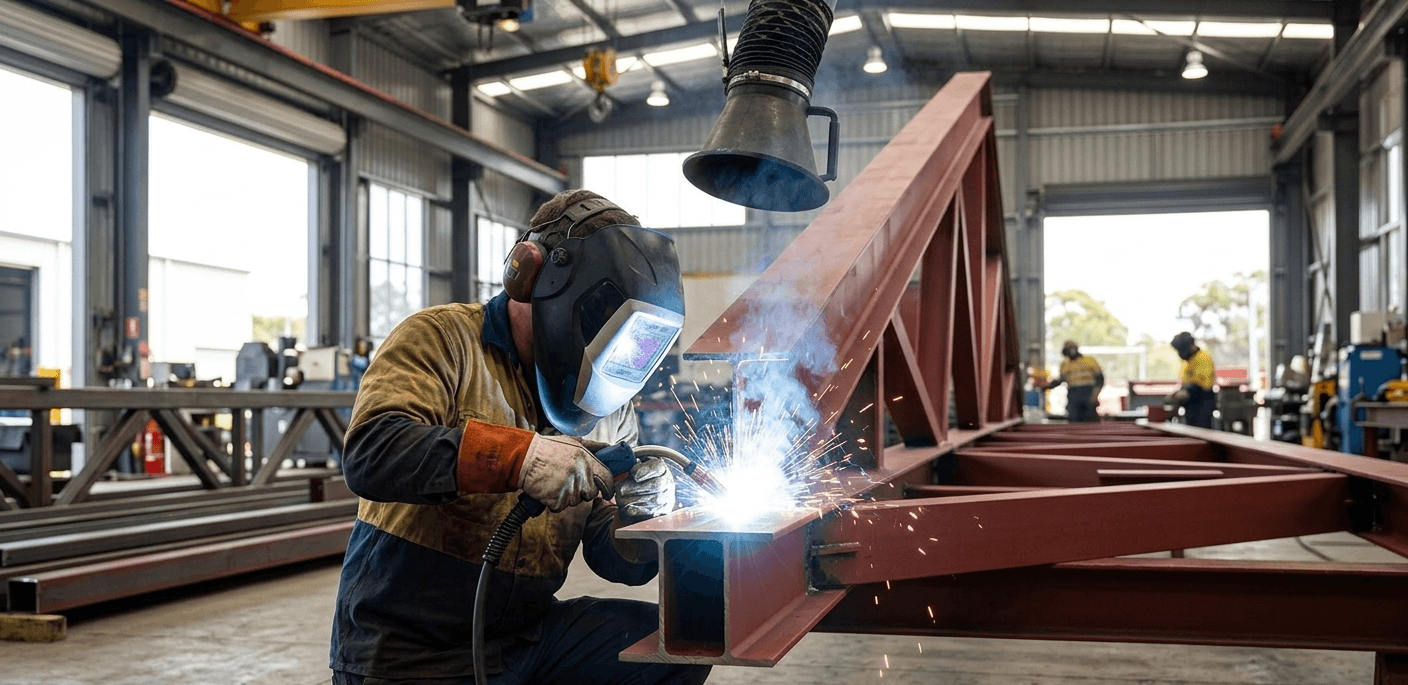
What Type of Welding is Used for Structural Steel?
In structural steel fabrication, the strength of the final structure depends heavily on the quality of its welds. Choosing the right welding method is essential for ensuring durability, safety compliance, and long-term structural performance.
Different welding techniques are used depending on the project requirements, steel type, load-bearing demands, and environmental conditions. For businesses involved in steel fabrication in Australia, selecting the correct welding process plays a major role in achieving safe and reliable construction outcomes.
Common Types of Welding Used in Structural Steel
1. MIG Welding (Gas Metal Arc Welding)
MIG welding is one of the most commonly used methods in steel fabrication. It is fast, efficient, and suitable for a wide range of applications, making it ideal for workshop-based production and high-volume fabrication work.
It is widely used by structural steel contractors for both light and heavy fabrication projects where speed and consistency are important. MIG welding also provides clean welds with minimal post-weld finishing.
2. TIG Welding (Gas Tungsten Arc Welding)
TIG welding offers high precision and produces clean, high-quality finishes. It is commonly used for thinner materials, detailed fabrication, and projects where appearance and accuracy are important.
Although slower than MIG welding, TIG welding is often preferred for specialised fabrication tasks that require fine control and minimal distortion.
3. Stick Welding (Shielded Metal Arc Welding)
Stick welding is a highly versatile welding method that performs well in outdoor and on-site construction environments. It is less affected by wind and weather, making it suitable for fieldwork and remote installations.
This method is commonly used for repair work, heavy-duty structural welding, and projects where portability and flexibility are essential.
4. Flux-Cored Arc Welding (FCAW)
Flux-Cored Arc Welding (FCAW) is widely used in industrial structural steel fabrication because of its ability to handle thick steel sections and deliver strong, deep weld penetration.
It is ideal for heavy commercial and industrial projects where strength and durability are critical. FCAW is also efficient for high-volume welding and demanding site conditions.
Choosing the Right Welding Method
The most suitable welding technique depends on several project factors, including:
• Material thickness
• Project environment (indoor or outdoor)
• Required structural strength and durability
• Project budget and timelines
• Compliance and engineering requirements
Projects handled by commercial structural steel specialists often require a combination of welding methods, depending on design complexity and load requirements.
Selecting the right process ensures better efficiency, improved safety, and long-term structural integrity.
Why Quality Welding Matters
High-quality welding is essential for the performance and safety of any steel structure. Poor welding can lead to structural weaknesses, compliance issues, and costly repairs in the future.
Quality welding supports:
• Structural strength
• Engineering compliance
• Workplace and public safety
• Long-term durability of the structure
• Reduced maintenance and repair costs
This is why working with experienced professionals in steel fabrication in Australia is critical for achieving reliable outcomes.
Role of Skilled Fabricators
Specialised professionals, including heavy-duty staircase fabricators, rely on advanced welding techniques to produce safe, durable, and compliant structures.
Experienced fabricators understand how different welding methods affect structural performance and ensure the correct process is selected for each project.
Their expertise helps reduce project risks and improves both construction quality and efficiency.
Modern Welding Technology in Structural Steel Fabrication
Technological advancements have significantly improved welding precision, speed, and quality control. Automated welding systems, robotic fabrication, and advanced inspection methods now help improve consistency across large-scale projects.
These innovations allow structural steel contractors to deliver stronger welds, faster turnaround times, and improved compliance with modern engineering standards.
Why Professional Expertise Matters
Working with experienced structural steel contractors ensures the right welding methods are selected for your project based on structural requirements, safety standards, and long-term performance.
From commercial developments to specialised fabrication handled by heavy-duty staircase fabricators, professional expertise helps ensure quality workmanship, reduced risk, and cost-effective project delivery.
Choosing the right contractor is just as important as choosing the right welding method. Whether you need support for commercial construction, industrial steel fabrication, or specialised projects, we deliver precise workmanship and dependable results.
Contact Kaizen Steel today to discuss your project and get expert guidance from trusted structural steel professionals.


Leave A Comment